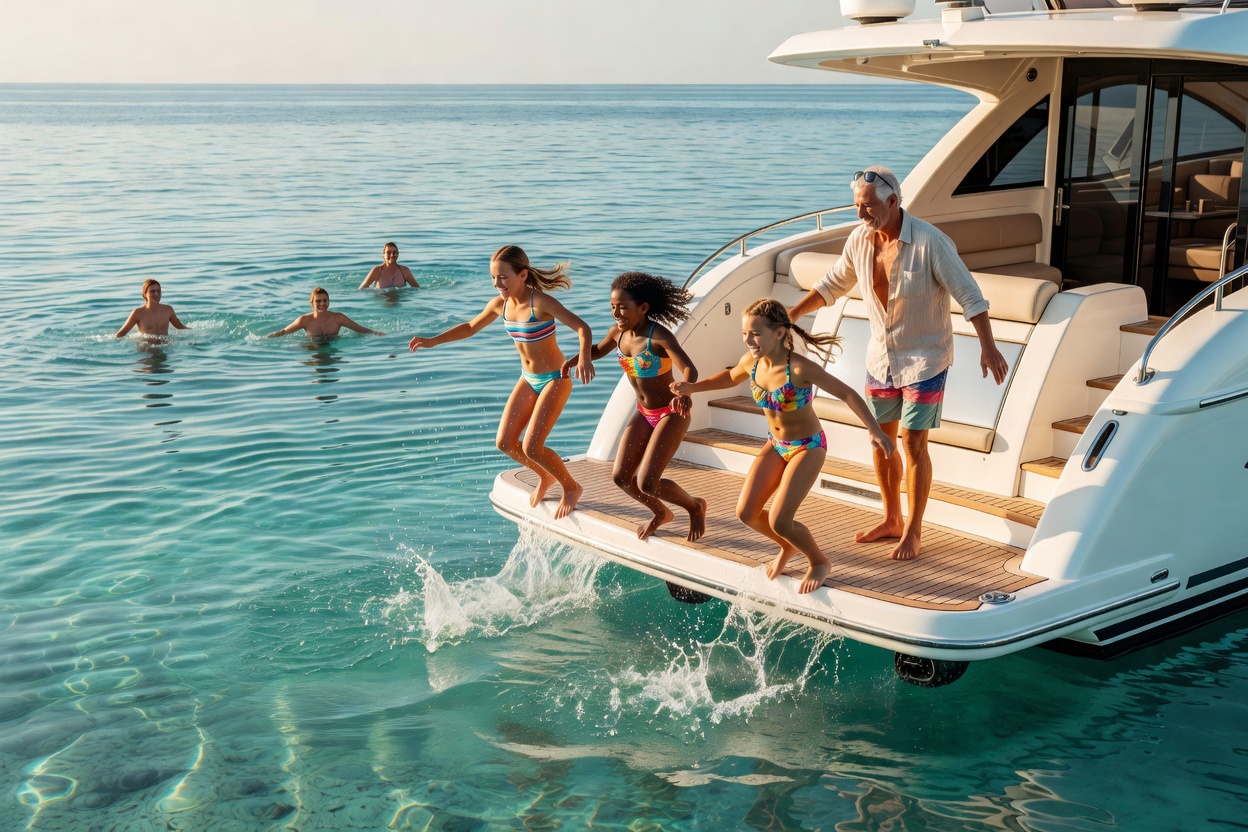
The real luxury is rhythm
The best days at sea tend to share a pattern: an early swim, a few hours of sailing, a long lunch at anchor and an unhurried arrival. Build that rhythm deliberately.
Holidays
A yacht is a small village afloat. How you share it, feed it and moor it shapes the holiday as much as any coastline.
The best days at sea tend to share a pattern: an early swim, a few hours of sailing, a long lunch at anchor and an unhurried arrival. Build that rhythm deliberately.
Full independence, full responsibility. Requires recognised qualifications and real experience.
You sail, they decide. Useful for unfamiliar waters, though it means sharing space.
The most hands-off option, usually on larger yachts with dedicated crew quarters.
Several yachts follow a lead boat — a common bridge between learning and independence, especially in the Ionian.
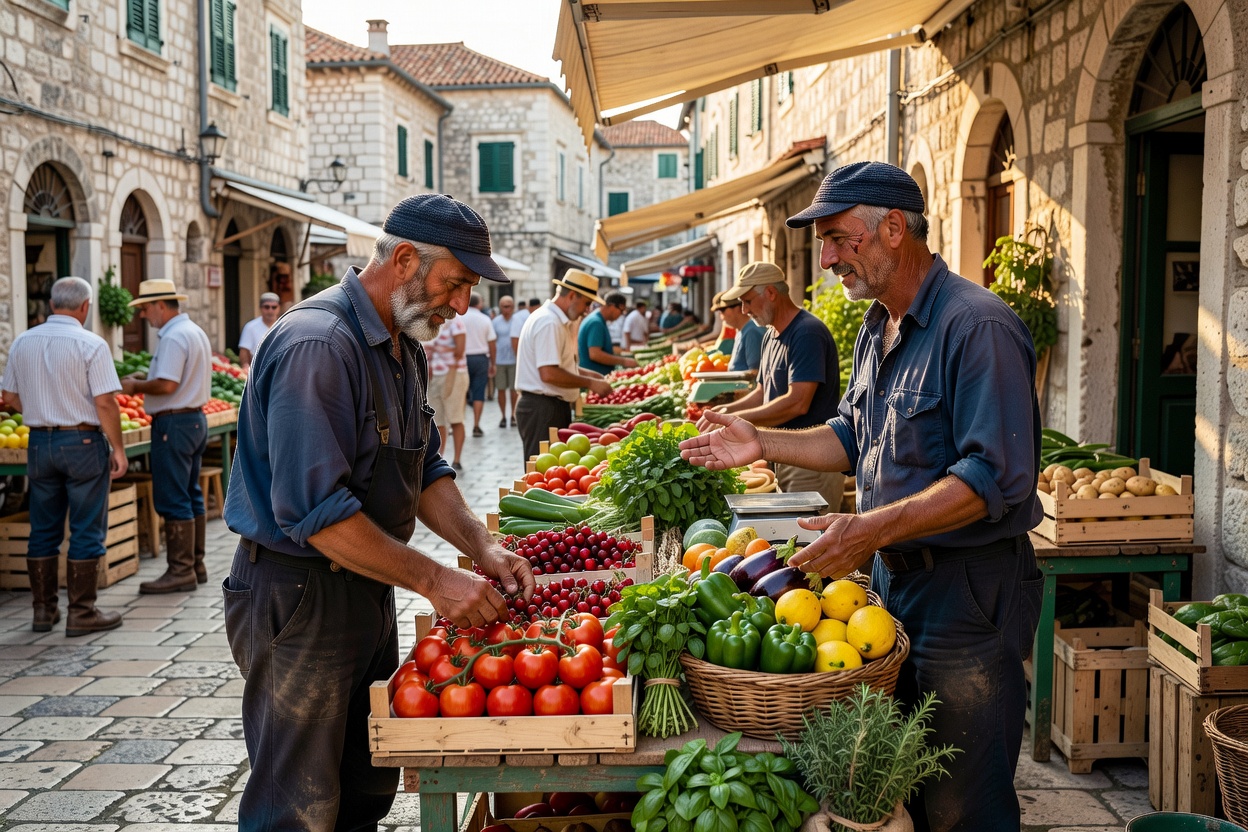
Markets in towns such as Korčula or Lefkada are part of the shore experience. Buy fresh food little and often rather than filling a small fridge on day one.
The choice of hull is often presented as a matter of taste, but it changes daily life in concrete ways. A catamaran offers more deck space, a level ride at anchor and separate hulls that give cabins a degree of privacy. That makes it popular with families and groups of friends. A monohull heels under sail, which some crews find exhilarating and others find tiring, but it generally points closer to the wind and costs less to berth. In marinas that charge by width, a catamaran can be noticeably more expensive, and finding space on a crowded town quay may be harder.
How you spend the night depends heavily on the region. In much of the Mediterranean, crews moor stern-to on a town quay, dropping an anchor or picking up a lazy line at the bow. It brings you right into the life of a harbour — cafés a few steps away, evening promenades along the waterfront — but it is also public and can be noisy. Swinging at anchor in a bay offers quiet and stars, with the trade-off of a dinghy ride to shore. In the British Virgin Islands, mooring buoys are common in popular bays, and in Croatia many bays have paid mooring fields managed by concessionaires. On the Turquoise Coast, taking a long line ashore to a rock or tree is routine.
Even a generous yacht is compact. Fresh water and electricity are finite, so short showers and mindful charging become habits. Conversations before departure help: who wants to learn to helm, who wants to read in the shade, who is anxious about rough water. Agreeing a rough daily rhythm early prevents most friction. For families, a simple rota for small jobs — fenders, lines, washing up — gives children ownership of the voyage.
Most crews strike a balance between galley meals and harbour restaurants. Breakfast and lunch at anchor are simple and pleasant; dinner ashore becomes the social highlight. In Greek harbours, tavernas on the quay are part of the mooring experience; in Dalmatia, konobas serving grilled fish and peka dishes are a long-standing tradition. Remember that a planned restaurant evening ties you to a harbour, which can conflict with a quieter anchorage plan.
Many of the most beautiful anchorages sit above fragile habitats. In the Balearic Islands, protected Posidonia oceanica seagrass meadows are covered by regulations restricting anchoring over them, and similar care is encouraged across the Mediterranean. Use holding tanks where required, take rubbish ashore and respect national park rules such as those in the Kornati and La Maddalena.
Mooring fees, anchoring rules and park entry requirements change from season to season. Check with harbour offices or park authorities rather than relying on older guides.