A good yacht holiday is rarely about the boat. It is about how a coastline’s character, the distances between its harbours and the hours you spend ashore fit together. This atlas helps you weigh those three bearings before you commit to a week at sea.
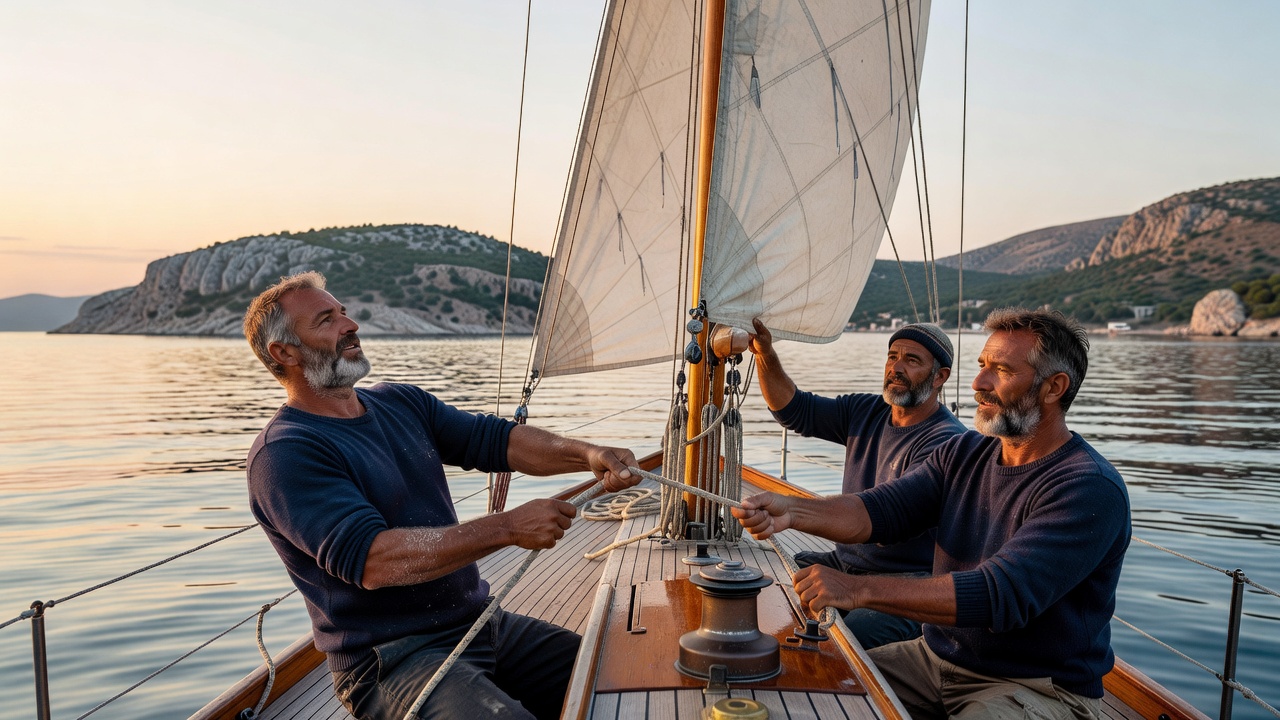
Crew at work in the channels of central Dalmatia, Croatia.
Three fixed bearings
01Croatia’s Kornati National Park, declared in 1980, protects a dense archipelago of 89 islands, islets and reefs.
02The Strait of Bonifacio separating Corsica and Sardinia is only about 11 km wide at its narrowest.
03The official Atlantic hurricane season, relevant to the Caribbean, runs from 1 June to 30 November.
Destination overview
Coasts with Distinct Personalities
Rather than ranking destinations, we read each coast by what it asks of you: how far you must sail between stops, how sheltered the water is, and what waits on land.
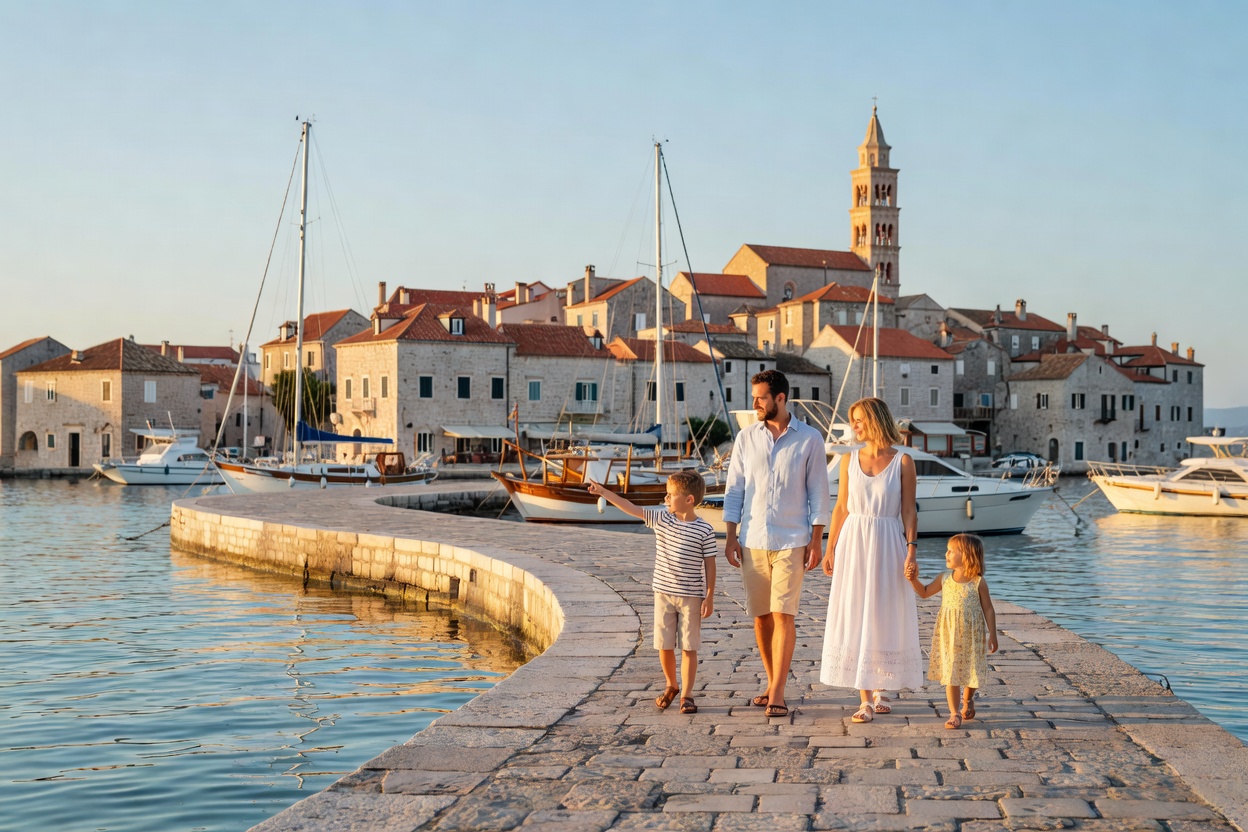
Hvar Town waterfront, Croatia.
Dalmatia, Croatia
Short hops between limestone islands, walled towns such as Split and Dubrovnik, and the stark beauty of the Kornati. Distances are modest, which leaves real time for wandering ashore. The trade-off is summer crowding in popular harbours and the occasional bora from the north-east.
Lefkada, Meganisi, Ithaca and Kefalonia sit close together in water often called gentle, with afternoon breezes that build predictably. A forgiving first charter ground.
Most charter weeks give you six usable sailing days. How you spend them is a negotiation between miles and mornings ashore.
Day one · settle in
Keep the first passage short. A two- or three-hour sail lets the crew learn the boat and the anchor routine before anyone is tired.
Middle days · reach out
Place your longest passage in the middle of the week, when the crew is confident and the forecast is clearest.
Final days · close the loop
Finish within easy reach of base so a change in weather never turns the last day into a race.
Practical caveat
A rule of thumb many skippers use: plan around 15–25 nautical miles a day for a relaxed week on a cruising monohull. Treat it as a planning range, not a promise; wind, sea state and crew stamina decide the rest.
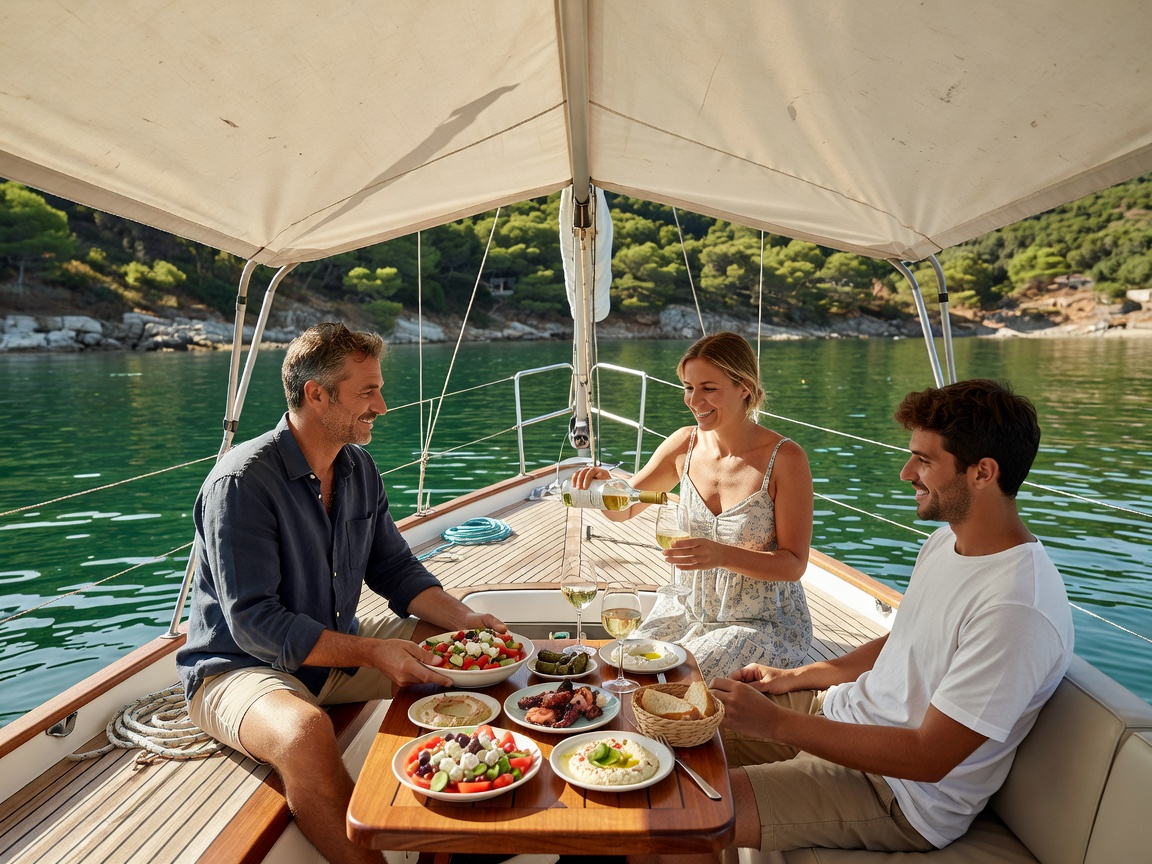
Comfort on a yacht is less about finishes and more about rhythm: shade at midday, a calm anchorage at night, a crew that agrees how much sailing it wants. Bareboat, skippered and crewed options each change that rhythm in different ways.
Jollyjinxsparksp is an independent reading resource. We do not sell charters, take commissions or rank destinations for payment. Our pages describe enduring characteristics of coastlines, published regulations and long-observed weather patterns, and we point you to official sources for anything that changes.
About cookies We use necessary cookies to run the site and, with your consent, optional ones to measure visits. You can change this at any time. More about cookies